Posts

Showing posts with the label things to learn

Learning Sign Language Part 2

Image
In this blog, I previously featured learning sign language as a possible lockdown activity for kids and even adults. On May 23, the De La Salle College of St. Benilde (DLS-CSB) announced that starting Saturday, May 30, 2020, it will be offering free sign language lessons via Facebook Live. The first session will be from 4:00-4:30. The lessons are free, but participants are encouraged to donate to DLS-CSB's #SignForSigns fundraising campaign for the benefit of  deaf students who are stranded in dormitories, indigent deaf scholars who need to return to their provinces after the extended lockdown is lifted, and faculty who are on a “no work, no pay” scheme. (Source: ABS-CBN News )  A minimum donation of P350 will give you access to an online Filipino Sign Language learning kit. Sign language is a skill that will enable you to be part of the silent but wonderful worlds of deaf people. This lockdown has taught us the value of making connections with others, and learning...

Learning How to Code

Image
Computer coding is a very valuable skill. Knowledge of computer ptogramming, website development, game development, data analysis, and other  related activities makes one desirable in the job market.  As society becomes more and more dependent on computers especially as physical distancing has forced us to transfer our activities online, people who know computer coding will become even more and more in demand.  Thus, encouraging your children to learn computer coding during these days of lockdown is a good idea. You and your children may learn coding for free at www.codeacademy.com  . For reasonable fees, you may also enroll in online coding classes at The Coding School .  The Coding School offers classes to children as young as six years old.  Tech requirements for the courses are indicated on the website. By learning computer coding during the extra free time provided by these days of lockdown, your children can turn lemons into lemonade by taking...

Getting Kids into Reading

Image
Encouraging kids to read is an obvious choice of an activity during lockdown that it needs no introduction.  But some parents may be wondering how to do it, especially in these times when electronic gadgets attract children's attention more than books. Here are some tips: Be involved, or at least, interested . The simple act of initiating a conversation with children about what they are reading can reinforce good reading habits. Ask them what they are reading, listen to them when they talk about it, and talk to them about it. Talking to children about their readings is also an opportunity to encourage critical thinking, impart values, and explain complicated topics. Keep it light and easy... Do not make reading a chore or else all the more will children not like it. Also, in a conversation I had with a friend who has written award-winning children's stories, he complained to me that a lot of children's books being published these days are too serious. I tend to agre...

Learning Filipino Sign Language

Image
When I was a kid, I taught myself the alphabet in sign language just for fun. It was worth it, because I could communicate with my dad's deaf cousin during family reunions. It was wonderful being able to connect with her, to see how her silent world is just as rich as mine. Filipino sign language is another skill you and your children can learn during the extra free time available in these days of lockdown. Start with the alphabet, then learn one phrase or word at a time. Practice the signs again and again until you master them. Here are videos that demonstrate some basic signs: https://www.youtube.com/channel/UCXbEzZsWfyODLbSOi77T0-w https://youtu.be/_PYpGJdFt5w https://youtu.be/Gk9h7PYCXtQ There are also many downloadable apps that can help you learn Filipino Sign Language. They can be found at Google Play Store. You may have to pause and replay the videos again and again while learning the signs. Learning Filipino Sign Language is more than just a wholesome div...

Learning Knots

Image
Learning to tie knots is a staple activity of Boy Scouts and Girl Scouts. But your kids need not be Boy Scouts or Girl Scouts in order to learn to tie knots. Knot-tying is a useful skill to learn. It comes in handy in outdoor activities or even in household chores like installing a clothesline between two poles. It may even help save someone's life, as knots are often used in search-and-rescue operations. There are many online resouces to help your kids learn different knots. This website , for example, has easy-to-follow videos showing how different knots are tied. This article also has videos on how to tie ten of the most basic knots, as well as explanations of what each knot is used for. In learning to tie knots, practice is important. Your kids can practice using ropes, cords, or even bathrobe sashes. ( Note: young children should be supervised to prevent the danger of strangulation. ) For some knots like the clove hitch, they will need a ruler or a stick or a rod to pr...

Learning Magic Tricks

Image
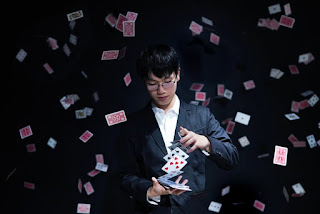
Your children will be hits at your next party or school talent show if they can entertain with magic tricks.  You might also want to learn these tricks yourself for fun. A lot of magic tricks are easy enough for children to learn. This website is especially designed for children who want to learn magic tricks. There are also many instructional videos on Youtube. The extra free time during these days of community quarantine can be spent learning, rehearsing, and mastering magic tricks. Your children should practice the tricks again and again until they can perform them confidently and without giving away the secrets. Pretty soon, they will be able put up their own magic show to amuse and delight.

Learning Art Appreciation

Image
With so many museums and art galleries putting up virtual tours these days , and with the extra free time your children (and possibly you) have, it is a perfect time to learn art appreciation. Looking at paintings together with your children is a rewarding way to spend time with them. ( Note: it is the same with paintings as with movies: some subjects may require additional parental guidance for children. ) Learning art appreciation is not about the boring memorization of the various art movements through history, although it would be cool too if your kids could learn them. Rather, it is learning how to look at paintings and what to see in them. In her article entitled "How to Look at Art with Your Children" , Cindy Ingram suggests asking kids three questions when looking at art with them: She suggests having fun with the paintings: posing like the characters, for example. ( The Qeddeng Family posing as the Spoliarium .) Another way to look at paintings...

Learning About Outer Space

Image
(Image credit:  NASA/JPL-Caltech/Space Science Institute) Those who know me well know how passionate I am about astronomy and how I love to promote the hobby.  However, I have been controlling the itch to feature it in this blog because I did not want to encourage your kids to violate curfew rules and the other safety measures being imposed these days. But then, I realized, there is no reason kids cannot do what we amateur astronomers do whenever the weather is not conducive to stargazing: take advantage of the downtime to read up about outer space.  There is also no reason you cannot join your kids in learning about outer space. One resource is the kids' section of the NASA website, which has stories, games, pictures, videos, and other activities. ( WARNING: please supervise your kids in doing the activities. Also, use your sound parental judgment in deciding whether to allow the activities that involve going outdoors.) The website of Astronomy ...

Codes and Ciphers

Image
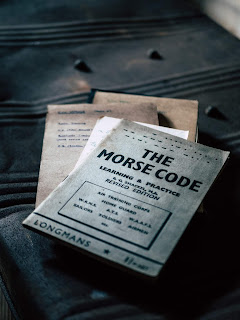
Anyone who has grown up watching detective TV shows during the 1980s would have seen the heroes (and the villains) using codes and ciphers to send secret messages to each other. You and your children can have so much fun making up codes, sending secret messages to each other, and decoding them. The simplest secret code substitutes each letter of the alphabet with a number, letter, or symbol. For example, A becomes 1, B becomes 2, and so on. So "My name is John" gets written as "13 25 14 1 13 5 9 19 10 15 8 14". Another is to use the alphabet backwards as a code. A becomes Z, B becomes Y, and so on. You can make your own code, substituting symbols for letters, for example.  You can read about some other codes here.   If you have materials at home, this video shows you how to make and use a secret decoder wheel. Another activity you can do is learn the Morse code, which is comprised of dots and dashes (or "dits" and "dahs"). Morse c...