Posts

Showing posts with the label activities

Partial Solar Eclipse on June 21, 2020

Image
First of all, my apologies for the long absence from this blog.  With the shift from ECQ to GCQ in Metro Manila, I have been busy with my day job and with other concerns.  I imagine that the kids will soon be resuming school (in whatever form "school" will take in the current situation), and keeping them busy will be less of a concern by then.  But every now and then, I will still be posting about fun educational activities for kids of all ages to try.  I enjoyed accompanying all of you these past months, and I hope that in one way or another I have been able to help you all ensure that learning and fun does not end, even during lockdown. One of the activities I featured in this blog is learning about outer space .  This coming Sunday, June 21, 2020, there will be a partial solar eclipse at 3:01 PM (Philippine time).  Observing this natural phenomenon will be a valuable opportunity for you and your children to learn about outer space.  Weather p...
Papier Mache Projects

Image
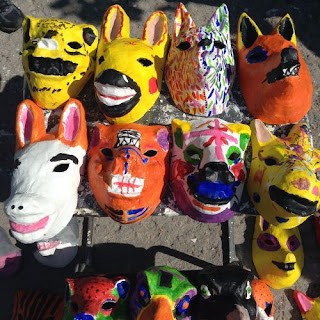
Papier mache is easy to make.  All you need are old newspapers, water, and flour or glue.  And you can make a lot of things with it:  masks, vases, bowls, animal models, jewelry, etc.  When it is dry, you can paint and varnish it. Here are some instructions on how to make papier mache, and here are a lot of projects you can do with it.  Children may need help with big projects such as those that involve chicken wire frames, but there are many small projects that are easy enough for children to do. After you have some experience doing some of the projects in those websites, you can experiment with some of your own.

Projects with Pressed Leaves and Flowers

Image
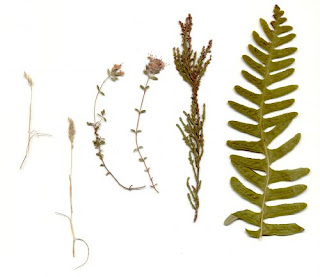
If you have a garden or a backyard or even just a few indoor plants, you and your children can gather a few leaves.  There are so many activities you can do with them. Just from among the activities that were featured in this blog, you can make leaf rubbings , leaf prints , or negative leaf prints using the splatter painting technique . Then, you can also press them and make projects with them. Just insert them between the pages of an old telephone directory, put some heavy books or other heavy items on top of the directory for weight, and leave the leaves alone for a few days.  When they are already dry, you can use them to decorate cards, book marks, or other items.  Or you can simply make pretty pictures with them. Another thing you can do with pressed leaves is to make an herbarium. "Herbarium" is just a fancy name for a leaf scrap book.  Just mount  the leaves on one sheet of paper each and write descriptions of each plant, and then bind the sheet...

Silhouette Art

Image
(Photo credit:  https://commons.wikimedia.org/wiki/File:Head_silhouette.svg) Silhouette art looks simple but dramatic.  And you can easily make silhouette profiles of your friends and family members.   You will first need a sheet of paper that is big enough to accommodate the side-view shadow of your subject: manila paper, construction paper, the backside of old gift wrappers, etc.  Tape the paper on a wall, light a lamp or a flashlight, and have your subject sit between the paper and the lamp or flashlight.  Station the subject so that the light casts the shadow of his or her profile on the paper.  While your subject sits, trace the outline of her shadow with a pen or crayon. Cut out the profile.  You can either trace it on a white sheet of paper and then color it a dark color, or trace it on good-quality, dark-colored paper, cut that out, and mount it on a sheet of white paper.  You can add any decorations you want (like borders),...

Splatter Painting

Image
Splatter painting is fun and easy. Just dip an old toothbrush in paint, flick the bristles towards you, and let the paint droplets fall on a sheet of paper. (This can get messy, so you would want to protect your table or other nearby areas.) You can experiment with different color combinations.  Or you can put a leaf or a paper cut-out of any shape you want on a sheet of paper and then splatter-paint over it.  When you remove the leaf or the cut-out, you will see a silhouette of the leaf or paper cut-out. Splatter painting can be used to decorate cards, bookmarks, and other paper items.  You can also display your splatter painting as stand-alone art.  Whatever you do, you can easily make something beautiful with splatter art.

Making Rock Sculptures

Image
Perhaps in your garden, backyard, or even in your garage, you might find some spare rocks.  With some imagination, as well as paint and glue and some odds and ends, you and your children can make nice sculptures out of them.   After you gather the rocks and wash them, examine them:  perhaps their shapes might remind you of some animal? See what combinations of rocks you can put together to make the shape of the animal you have in mind.  Once you have mentally composed the figures, glue the rocks together.  You may use white glue; cement glue would even be stronger but it should only be applied by an adult and in a well-ventilated area. After the glue dries, you can paint the rocks to add other features.   Here are some ideas .     

Making Jewelry out of Paper Beads

Image
(Photo credit: https://upload.wikimedia.org/wikipedia/commons/a/af/Paper_beads.jpeg) Stringing beads into a necklace or bracelet is another craft that is considered easy enough for children.  However, I originally did not think of it as a good lockdown activity because while most households have sewing kits with a stash of thread in them, obtaining beads is a different matter. But I learned that it is possible to make beads out of paper.  The procedure is simple: cut the paper into narrow triangles, add glue to one side, roll them up with the aid of a toothpick or barbecue stick, seal them with glue or clear nail polish.  By making variations on the procedure , you can make beads of different shapes and sizes. You can use any kind of paper you want.  You can even use the pages of old newspapers and magazines for a unique look.   You can also make sophisticated jewelry patterns . Making jewelry out of paper beads is fun, but wearing it is even more fun. Who ...

Experiments with Vinegar and Baking Soda

Image
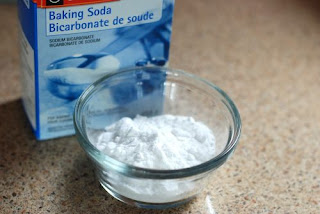
Mix vinegar and baking soda, and you end up with fizzy froth.  This is because combining vinegar with baking soda produces carbon dioxide. If you have spare vinegar and baking powder at home, and don't mind a little bit of getting messy, you and your children can do a lot of fun experiments -- from chemical volcanoes to home-made rockets. Some instructions are here .  Not only will your kids have fun; they can also learn about the chemical reactions involved . You can encourage your children to record in a notebook their observations of these experiments -- for example, the different results that various quantities of vinegar and baking soda produce.  After all, all this fun play is actually preparing them to become scientists in the future. 

Making a Bestiary

Image
Explorers of long ago made bestiaries, or books with drawings and descriptions of the strange new creatures they encountered in their voyages.  You and your children can pretend you are explorers and make bestiaries of your own. For your bestiary, you can use an old notebook or diary that still has blank pages, or you can make and bind your  own  book .   You can make your bestiary about real animals.  Perhaps you have done the other nature observing activities featured in this blog, like bird watching or observing indoor wildlife , and you would like to make a bestiary as a way to record your observations.  You can fill your bestiary with your observations -- in words and in drawings  of how various animals look like and behave.  Or you might want to fill your bestiary with animals of your own imagination, like what Matthew Mehan did in his book entitled Mr. Mehan's Mildly Amusing Mythical Mammals .  Ask yourself what your imagin...

Crayon Etching

Image
Crayon etching is easy to do and requires few tools.  You and your children can make stunning designs with it. The first step is to color a sheet of paper with different color patterns, using crayons.  It is best to use light colors at this stage. Then, using a black crayon, color over the color patterns. Once the sheet of paper is all black, use a popsicle stick, a barbecue stick,  a tooth pick, or any other etching tool of your choice to scratch out your design. A more detailed tutorial can be watched here . You and your children will be fascinated to see your design as you etch it. The colors will seem to glow out of the black background.

Learning to Play Igo

Image
(Image credit: https://upload.wikimedia.org/wikipedia/commons/f/fd/Stones_go.jpg) Igo is a Japanese board game of strategy where the object is to occupy as much territory as possible.  The rules are simple, but the game can get engagingly complex. It featured in a popular manga and anime series, Hikaru No Go .  The game has a worldwide following among people of all ages, and you and your children might fall in love with it as well. Unfortunately, igo boards are difficult to find especially during this lockdown.  But there are many venues to learn and play the game online -- like this website , for example. And this one . ( As always, make sure your children know the precautions to take when interacting with strangers online. ) Pretty soon, you and your children might be engrossed in what the American Go Foundation referred to as "the ancient game of emperors and samurai."

Learning to Play Chess

Image
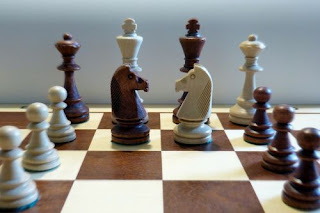
I never learned to play chess.  My friends who love chess say I am missing out on a lot of fun.  Chess is a way for you and your children to have fun together during this lockdown. It is also a way to develop decision-making skills, and it drives home the importance of considering consequences before acting. If you have an unused chess set at home and you know how to play, now is the time to bring it out and teach your children how.  This website is also a good place to learn chess.  It has pages with videos showing the rules and the basic moves. It also gives tips on strategy. It also allows you to play games against the computer and against other chess players.  There is also a forum where you can discuss chess with other enthusiasts. ( WARNING: Parents, please make sure your children know the precautions to take when dealing with random strangers online. ) Your children may be on the way to becoming the next chess champions.

Introducing Poetry Appreciation

Image
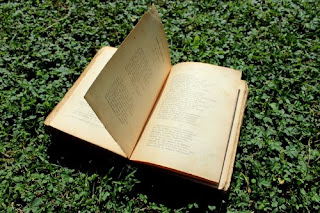
My parents introduced me to poetry at a very young age. To this day, they recall how I could recite "The Owl and the Pussycat" from memory, and how I used to laugh with childlike delight at the word "bong-tree". That is what poetry appreciation is all about. It's not about big words like "caesura" and "iambic pentameter" or decoding obscure messages in poems, although these can come later. It is about falling in love with language and discovering the power of words. I owe my current vocations as a lawyer and as a writer to many things, but I am sure having been introduced to poetry at a young age had something to do with them. How do you teach your children poetry appreciation? Just read poems aloud to them.  Let them enjoy the sound of the words: the rhythm, the rhyme, the repetition of words and sounds... You can start off your children with the same " The Owl and the Pussycat " poem I started out with.  Another exercise ...

Documenting Indoor Wildlife

Image
Lizards, rats, ants, cockroaches, spiders, moths...we adults find them disgusting but some children find them fascinating.  Scientists find them fascinating too.  In fact, there is a scientific research project, Never Home Alone, that solicits observations of indoor wildlife from citizen scientists - meaning, members of the general public like you and your children who may love observing nature.  The Never Home Alone project is part of a greater study of the state of the biodiversity of the planet. Some new species have even been discovered through the project. To participate, just create an account at the project's website and submit your observations -- including pictures, if any.  This app can help identify the species, and information on how to obscure your location for privacy purposes can be found here . As always, practice common sense when dealing with nature. Refrain from touching wild animals, for example. The diversity in nature is fascinating, ...

Cooking and Baking

Image
At first, I hesitated to feature cooking and baking as an ECQ activity for children because it is harder than usual to source ingredients these days. But then, I realized that part of the fun of cooking is discovering what one could come up with using what is available.  For example, canned sardines make good toppings for pan de sal pizza: just shred the sardines using a fork, mix with the tomato sauce with which they were canned, spread it on open-faced slices of pan de sal, add grated cheese, and heat in a toaster oven. It's very easy to make and children can help with tasks like shredding the sardines and spreading the mixture on the pan de sal. The same recipe can be made using other kinds of bread. Even very young children can be handy in the kitchen. Under their parents' supervision, they can make simple appetizers like skewers of fruit pieces and sliced cheese.  Or crackers topped with cream cheese and cold cut slices, maybe an olive or pickle slice or two. The...

Restaurant at Home

Image
Happy Easter! It is time to get festive -- not just today but for the rest of the Easter season. But how do you get festive during lockdown? Recently, a heartwarming video went viral.  It depicts how a mom and dad recreated a restaurant for their two small sons who have been wanting to eat out and who are too young to understand what the lockdown is all about.  For those of you who have young kids who are similarly situated, they will enjoy the same treat for a meal or two.  It will also be an opportunity to teach them proper table manners. If the young kids have older siblings, the older siblings can be enlisted to help recreate the restaurant setting.  They will enjoy it, and it might even lead them to careers in food and beverage or other related fields  someday.  They can help cook, decorate the dining room (perhaps even try out some fancy napkin folding ), and play roles such as waiter or waitress. Those who are playing waiter or waitress, a...

Learning Magic Tricks

Image
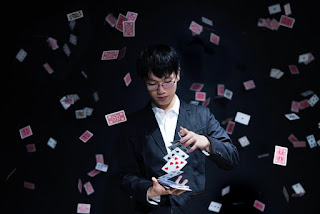
Your children will be hits at your next party or school talent show if they can entertain with magic tricks.  You might also want to learn these tricks yourself for fun. A lot of magic tricks are easy enough for children to learn. This website is especially designed for children who want to learn magic tricks. There are also many instructional videos on Youtube. The extra free time during these days of community quarantine can be spent learning, rehearsing, and mastering magic tricks. Your children should practice the tricks again and again until they can perform them confidently and without giving away the secrets. Pretty soon, they will be able put up their own magic show to amuse and delight.

Producing and Recording a Live Radio Program

Image
(Image credit: https://upload.wikimedia.org/wikipedia/commons/e/e7/US_Navy_060521-N-9076B-059_Lt._Janel_Rossetto%2C_Chief_Musician_Donald_Chilton_and_Musician_2nd_Class_Ian_Charlton_appear_as_guests_on_the_Philippines%27_largest_radio_station_DZRH.jpg) Before the days of Netflix and television, people listened to the radio for entertainment. To this day, radio drama and other programs are still staple forms of entertainment in many places. Producing and recording your own radio program can be a fun project for your kids - or even for the whole family. First, you write the script. It does not have to be long. You can tell an existing story or make up your own. Or, if drama is not your thing, you can do a documentary, an advertisement, a public service announcement on the importance of washing your hands - anything. What matters is that your script uses a lot of sound, narration, and dialogue since your listeners will rely entirelt on what they hear to understand what your...

Backyard Birdwatching

Image
(Image source: https://upload.wikimedia.org/wikipedia/commons/0/01/BLACK_NAPED_ORIOLE_%288553658674%29.jpg) Just because you and your kids are cooped up inside the house does not mean you cannot enjoy nature. You can do backyard birdwatching. What do you do when you do backyard birdwatching? You literally just watch the birds that you can see from your window, balcony, or porch. Birds are fascinating creatures, and watching them provides hours of entertainment. No need to tune in to National Geographic or Discovery Channel when you can watch a live nature show outside the window. To make it more interesting, you and your kids can learn to identify the birds you see. When you see or hear a bird, make notes and sketches about them. The sketches do not have to be masterpieces - just enough details for you to be able to look up the bird in a book, website, or bird identification app. If you cannot see the bird but can hear it, you can record its call and submit  the r...

Codes and Ciphers

Image
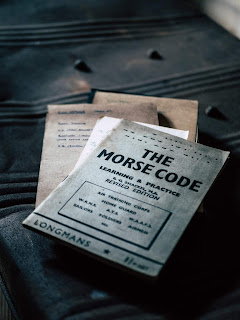
Anyone who has grown up watching detective TV shows during the 1980s would have seen the heroes (and the villains) using codes and ciphers to send secret messages to each other. You and your children can have so much fun making up codes, sending secret messages to each other, and decoding them. The simplest secret code substitutes each letter of the alphabet with a number, letter, or symbol. For example, A becomes 1, B becomes 2, and so on. So "My name is John" gets written as "13 25 14 1 13 5 9 19 10 15 8 14". Another is to use the alphabet backwards as a code. A becomes Z, B becomes Y, and so on. You can make your own code, substituting symbols for letters, for example.  You can read about some other codes here.   If you have materials at home, this video shows you how to make and use a secret decoder wheel. Another activity you can do is learn the Morse code, which is comprised of dots and dashes (or "dits" and "dahs"). Morse c...